Showing posts with label Reading. Show all posts

Wednesday, September 29, 2021

Giving Up on a Book

I have a stubborn streak. The folks who know me quite well will not be surprised at all to hear this. It plays out in lots of different ways in my professional and personal life. 

It even comes out in my reading habits. I am unlikely to give up on a book, partly out of sheer stubbornness. Even if it's a slow-mover, or not capturing my imagination, or just really, really dense...I'm usually tenacious enough to stick with it.

Stubborn, see?

But there have been a few notable exceptions.

In high school, I was assigned to read Moby Dick. I tried. I really, really tried. It's the only book I was assigned in high school that I did not finish reading. (Sorry, Mr. Sjoerdsma...I tried...) There was, of course, no googling in the days of yore of the early 1990s. I didn't even have the Cliffs Notes; I just muddled my way through, and tried to not get called on in discussions of the readings.

As a former science teacher, I tried reading Darwin's On the Origin of the Species. I made it through about 20 pages before the tyranny of the urgent crowded out the reading. So I'd like to say that it wasn't lack of interest, but rather the density of the text and the language that made it a challenge to devote the time. I really should come back and try this one again, but it hasn't been compelling enough for me to bring it to the top of the reading list for me again. (Yet?)

And then there is Ready Player One. I have this one on my bedside table right now. I checked it out from the library weeks ago. I have heard such great things about this book; it seems like everyone I've talked to who has read it loved it, and they just rave about it. It took me a week to even crack it open, and then I read a few chapters. I just didn't get into it. I've tried getting started with it again several times...and I'm just not into it. I even renewed the book from the library to give me a little more time, but I think it's going to go back to the library unread.

Why do I feel guilty about giving up on a book? I do feel guilty, somehow. I know that all of the reading specialists out there say that if kids aren't into a book, we should normalize letting them drop the book and find something else to read. But I am having a hard time with this, even after all these years.

Is it just stubbornness? That's probably 90% of it. But I think 10% of it is is that I wonder if "the part where it gets good" is just around the bend?

How about you? Do you give up on a book if you aren't feeling into it? Or do you keep slogging?


Photo by Karolina Grabowska via Pexels

Sunday, March 3, 2019

Reading for Pleasure and Reading with Purpose

True confession: after finishing my doctorate in 2017, I had a hard time reading anything. (Not unrelated: I also had a hard time writing anything. But that's not really the point of this post...)

Honestly, I have had a hard time getting into reading anything for about 18 months. I'm closing in on two years since my dissertation defense now, and I'm finally getting back into reading.

Oh, it's not that I never read anything, of course. I get four different professional journals, and I always skim through each of them when they arrive, and read an article or two that really catches my attention. I get WIRED magazine, and I eventually always read through each issue--though I still have the December, January, and February issues on my nightstand...and I'm not yet finished with the December issue. I read a few novels in my hammock in the summer. And I still read quite a bit online, usually profession-related things from EdWeek, or things I find on Twitter. And I do read and re-read articles and chapters for writing projects I have ongoing.

But truth be told, until very recently, I haven't found as much joy in reading. I haven't been really reading for pleasure very often since I started my doctoral work in 2013.  Of course, while I was in grad school, so much of my reading time was taken up with reading for class or for my own research. But in the almost two years since defending my dissertation, I haven't gravitated back to reading for pleasure.

Today I'm thinking about why this might be the case.

Wednesday, September 12, 2018

How to Learn from a Textbook

I'm thinking today about textbooks.

Probably this is because today I gave my Middle School Curriculum & Instruction students an assignment to review curriculum materials. It might also be because I have a textbook that I love that I'm using for teaching World Regional Geography. Okay, and it might also be because I was helping one of my kids take reading notes on a textbook-based reading assignment tonight.

Textbooks are a really great resource for teachers. I remember feeling as an undergraduate Education major a sense of pressure that if I ever relied on a textbook I would somehow be failing my students. But I've definitely come around: textbooks can be an extremely helpful resource to support teaching.

Friday, September 15, 2017

Learning to Teach Again: Getting Them to Read

I've really been thinking about reading this week. A big part of the prep work for college-level course work is reading. I assign a fair bit of reading to my students--generally at least a chapter to prepare for each class meeting. (This varies a bit, of course, depending on the subject matter or the course.) And I think it's pretty important for students to do this reading.

I mean, if it wasn't important, I wouldn't assign it, right?

But I'm also a little cynical. I know that as a college student, I didn't always do all of the reading assigned. (Gasp! This feels like true confessions...) I suspect that some of my students are in this boat too. It's not like they deliberately set out to not prepare for class. But I wonder sometimes if there are things I'm doing as an instructor that make it less likely that they will do the reading I want them to do?

Monday, March 7, 2016

Your Worksheet Isn't Doing What You Think It's Doing

A certain middle schooler I know, somewhat disgruntled about doing his homework some time ago, snapped this picture and texted it to me:


This was part of a lesson in his English book about effective and ineffective summarizing strategies. While not a reading assignment, exactly, it prompted a conversation.

His argument went something like this:

Monday, March 2, 2015

A Little Nonsense with Dr. Seuss

Today would have been Dr. Seuss's eleventy-first birthday.

Dr. Seuss held a very important place in my childhood--like so many kids! 

I even performed a dramatic reading of The Cat in the Hat for speech in one of my high school English classes.

And I can't tell you how many times my own kids asked me to read Hop on Pop, and Green Eggs and Ham, and--our favorite--One Fish, Two Fish, Red Fish, Blue Fish

Dr. Seuss's wild, whimsical imagination continues to inspire me to this very day. His artwork and lyric prose still bring me great joy.

The quote below came from a list from mental_floss that I saw this morning. I mashed it up with a free-hand drawing by one of my ridiculously talented students.

Here's to a little "nonsense" for your day. 

May you embrace a little fantasy and enjoy extra laughter today!


Drawing by Anna Krygsheld, photo by Dave Mulder, with text from the illustrious Dr. Seuss overlaid.

Friday, July 18, 2014

Honoring Orville

I am a bibliophile.

I was talking with a friend yesterday who uses the Kindle app on his iPad for almost all of his reading today. You would think that I might too, given how techie I am.

But I don't.

Give me a real book. In fact, give me a stack. Give me a library.

I actually have a stack of new books sitting here in my office that I intended to read this summer, but now that summer is half over, it's looking unlikely that I'll read them all.

But I did grab one, just to get started. It was the smallest and shortest book in the stack. The title? Orbiting the Giant Hairball, by Gordon MacKenzie. I read it in one evening.

My summer reading stack, and the one I chose to read first.

It is a lovely book.

Saturday, June 15, 2013

Why Students Don't Read

I saw this online yesterday (thanks to @jedipadmaster for sharing!) and I thought it was interesting. It's worth the five minutes to watch it, I think...


Interesting points these kids raise, don't you think?

Friday, May 31, 2013

Kids' Summer Reading

Summer vacation! Time for all that great free-reading that kids might not have time for during the school year between homework and piano lessons and soccer practice and everything else!

Image from david.orban via Flickr CC BY 2.0

My own kids are out of school, and we've already been to the library once. I think my son has already read four of the eight books he picked out! (No trouble getting that one to read...)

For more reluctant readers, perhaps some suggestions might get the ball rolling? Earlier this year, I wrote a series of posts providing some reading suggestions. I called the series "Books for Boys." (No gender-bias intended, really...read my rationale for this.) Truth be told, most all of the books listed below will be great reads for both boys and girls, though I'm focusing on the 5th-8th grade crowd here for the most part, though some of these might be great read-alouds for younger kids too.

Monday, April 29, 2013

Regarding Homework...

Why do teachers give homework?

I was a middle school classroom teacher for the first eleven years of my teaching practice. The longer I taught, the less homework I assigned. That's not to say I didn't give students assignments--but they rarely had to do them at home. I'm curious about how teachers use homework, and what role it really plays in students' learning.

It seems to me that teachers generally assign homework because they feel some pressure to do so. They may put that pressure on themselves; they believe that assigning homework for their students will afford the practice they need to master certain content or skills. Others feel pressure from colleagues: "The other 6th grade teachers are assigning homework...so I guess I should too!" Others may feel pressure from parents who don't want their kids left behind somehow. Still others may feel pressure from their school or district; there may be school- or district-wide policies in place requiring a certain amount of homework at different grade levels.

The argument often goes that homework will improve achievement--that students will learn more if they have homework.

Saturday, February 23, 2013

Books for Boys: The Joys of Mythology

Mythology is just good fun. Great stories packed with heros and villains and gods and giants and monsters and angst and humor and all kinds of weird names.

I think reading myths can provide a good opportunity to talk about faith perspectives with your kids: comparing their beliefs with beliefs held by others. And certainly there is a cultural perspective that can be learned by reading the myths of a particular group of people. Add to this the fact that many fantasy stories seem to connect to characters and themes that appear in mythologies (Joseph Campbell, anyone?) and you've got some pretty strong reasons to try and hook a middleschooler on myths.

Because the stories are so great--battles, monsters, good & evil--I've found that these stories readily hook many boys. My favorites are D'aulaires' books; both the Greek Myths and the Norse Myths are excellent!


Of course, there are lots of other collections of mythologies from around the world, and D'aulaires' aren't the only ones around. But I think pretty highly of them--perhaps nostalgically, since I loved them as a child--and they've stood the test of time...still great today. Classic stories, classically told.

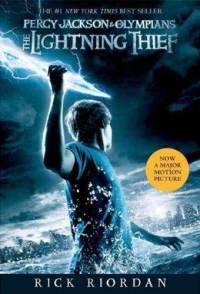
For a more contemporary take on the Greek myths, I might recommend the Percy Jackson series. Here mythology takes a turn into fantasy. Imagine a world where the Greek gods are real, and the monsters and heroes from Greek mythology are also quite real and hiding just out of plain sight. And then imagine that you are a young adolescent who has to come to terms with the fact that his absent father is actually one of the Olympians and you have a pretty good introductory plot summary to The Lightning Thief. Engrossing stories--Rick Riordan is a fantastic storyteller!--that pull the drama and comedy of the classic myths into contemporary society. A great series!


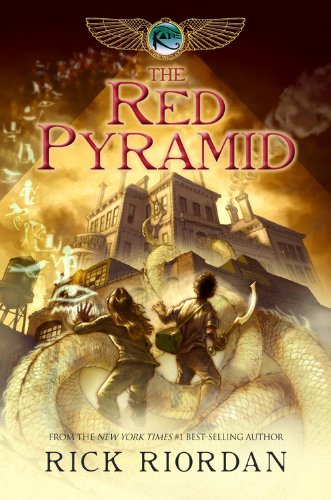
And if you give the Percy Jackson books a shake and enjoy them, you might go on to Riordan's take on Egyptian mythology--similarly told, translating classic stories into contemporary society--the Kane Chronicles. I've only read the first book in the series, The Red Pyramid, but I thoroughly enjoyed it, and would definitely recommend it for the middle school (5th-8th) crowd. Action-packed storytelling that teaches you quite a lot about ancient Egyptian culture, society, and mythology. I'm hoping to read the next two books soon.

Do you have other mythological favorites? Please share!

Sunday, January 27, 2013

Books for Boys: 3 Realistic Fiction Titles too Good to Pass Up

Three very different stories here, but all in the realm of realistic fiction, and all books that I was able to use to hook middle school boys...

1. Crash by Jerry Spinelli
"Crash" is John's nickname, and it fits him perfectly. A cocky middle school football star, he crashes through every part of his life, on and off the field. His geeky classmate, Penn, is a common target, but Penn's unconventional way starts to affect Crash in a way he didn't expect. And when a shock at home sets his life reeling, John begins to see that crashing through people might not be in his best interest after all.

A compelling story of popularity and bullying that hooked middle school boys without exception!

Sunday, January 20, 2013

Thoughts on Literacy: Books for Boys

I'm a reader by nature. I usually have several books going at the same time. I currently have subscriptions to five different magazines or journals. And that doesn't begin to touch the reading I do in pixels.

I've always loved to read. In my childhood, I can remember coming home from the library with a stack of 20 books and having devoured them by the next week's trip back. I had favorites that I reread so many times I could practically recite them back to you. Fantasy and science fiction and adventure and mythology and schlocky kids-lit (Choose-Your-Own-Adventure!) and lots of non-fiction too...I loved to read!

Image courtesy katerha CC-BY 2.0
When I became a teacher, I kept on reading--and I still read a lot of Children's and Young Adult Lit today, even though I'm a grownup. I figured that the best way to get a kid hooked on a book was knowing a lot of books, so I could make good suggestions for them. I wasn't an English teacher (oh, heavens...that would be a bad thing...), but I really felt--and still feel--strongly that kids need to have adults modeling reading for them if we want them to become readers. And I do believe the old adage that "every teacher teaches reading."

Saturday, January 19, 2013

Books for Boys: 5 Great Historical Fiction Novels

I'm not sure why, but I often had a hard time getting boys in my middle school classes interested in historical fiction novels. They seemed to gravitate toward fantasy or mysteries or sports stories. Nothing against any of these genres, but there is some great historical fiction that they might otherwise miss out on! But I could usually get a few kids hooked on books like these... (All great stories!)


1. The Black Pearl by Scott O'Dell.

Ramon is the teenage son of a pearl merchant who lives on the coast of Baja California. He is learning the trade, and wants to work as a pearl diver--one of the men who dives into the sea, collects oysters, and opens them to find the treasures inside. He enlists the help of Soto Luzon, a superstitious client of his father, to learn this task. But Soto Luzon warns him of a giant manta ray--the Manta Diablo--who is the master of the pearls and will want them back. When Ramon discovers a fabulous pearl, he thinks his dreams have come true! But as strange things begin to happen, Ramon begins to wonder if Soto Luzon is right about the Manta Diablo. A compelling tale, full of adventure and suspense!

Wednesday, January 16, 2013

Books for Boys: Four Survival Stories

My son came home from school the other day and told me they are reading The Sign of the Beaver (by Elizabeth George Speare) in 4th grade right now. This is a great book! It's been a long time since I've read it--probably since I took a Children's Lit class in my undergraduate work?--but that got me thinking about great books for boys. In my experience working with 5th-8th graders, many boys especially enjoy survival stories. So here they are: my top four survival stories for boys. (This might become a series..."Books for Boys"...)

1. The Sign of the Beaver, by Elizabeth George Speare, tells the story of a young teen left to guard his family's homestead in colonial America while his father goes to bring his mother and siblings to their new home. He endures many hardships, until he is befriended by the local natives, whom he had been told were savages looking to kidnap young white people. He is charged with teaching the chief's grandson to read, beginning a friendship that crosses cultures. A great survival story, but also one of understanding the bonds of family and friendship, and loving your neighbor as you love yourself.

Monday, November 12, 2012

13 Chapter Books All Kids Should Read

Earlier this fall, I ranted about reading incentive programs. (I have some pretty strong negative feelings about such programs.) In that earlier post, I referenced one of my favorite books, Twenty and Ten. A friend reported that after reading my post, she picked up a copy for her kids, who loved it (hooray!) She asked me for further recommendations...so here they are, my bakers-dozen of chapter books that all kids should read. In my mind, these would make great read-alouds for the 2nd-4th graders (with a few exceptions that I'll note), or independent readers for the 5th-8th grade crowd. They are presented in no particular order.


1. Chasing Vermeer, by Blue Balliet

Chasing Vermeer is a fantastic mystery-adventure--think of it as The DaVinci Code for the tween set. Here you meet Petra and Calder, unlikely 6th grade friends who are swept up in an investigation of art theft. You'll learn a lot about the famous renaissance painter, Jan Vermeer and some of the controversies related to his work, but it's wrapped up in hidden pictures, secret codes, and a quirky storyline that will capture the interest of pretty much every child to whom I've recommended this book. One of my very favorite books all around--not just kids' books!

Monday, September 24, 2012

Killing a Love of Reading

As I drank my morning coffee today, I was browsing my Twitter feed; a typical morning ritual for me. Someone I follow had shared an interesting blog post this morning about the problem of incentive programs for getting kids to read. You can read the post here if you are interested in what got my wheels turning.

I love to read. I try to read--in print, not just pixels--at least half an hour a day, no matter what else is going on, just for the pure pleasure of it. I usually have a novel on my night stand, often I am in the middle of another book or two (often profession-related), I subscribe to a couple of magazines and professional journals...there is a lot of print material close at hand. No one has to give me a star on the sticker chart to get me to read...I just love books.

My kids do too. Sometimes it drives my poor wife crazy: she'll come into the living room where my two kids and I have been reading, and find a dozen books and magazines laying around. My son often is in the middle of at least three or four books all at the same time. (The apple doesn't fall far...) I'd like to think that my kids came to love reading by having parents who love to read. 

I do worry a bit though that a teacher might do something to screw this up for them. (Sorry; that sounds pretty nasty, doesn't it?) I'm afraid that they might someday have a teacher who would set up some sort of incentive program to try and get the class to read more, and incidentally squash a their willingness to pick up a book to read it just for pleasure.

Does that sound counter-intuitive? That giving kids a reward for reading a book might actually make them want to read less?

I've seen it happen.

In my most recent position in a school, I served as Technology Coordinator. My office was adjacent to the school library. When classes would come in to look for books, I often would stroll out and talk with the kids about what they were reading, and offer suggestions of some of my favorites as well. (For a techie, I sure do like the ol' printed page!)

And while I could often "sell" a favorite book to an interested reader, there were some times where there was no hope.

I want you to picture the scene: there I was, with a knot of six or seven 5th graders, standing by the stacks. I'm trying to get to know their preferences for genres, their reading level.

"Historical fiction you say? You want a shorter chapter book? Hmmmm... Oh, here's a great one!  Twenty and Ten is of my favorites!"

I gave them just enough of the plot: the twenty kids living in an orphanage in Nazi-occupied France decide to take in ten Jewish kids and share their rations with them to keep them alive. They have to hide the fugitives, and when the nun who runs the orphanage is detained in town, they have to fend for themselves when the Nazis come looking for the Jews.

I had them hooked, and they were actually arguing over who would get to read the book first!

So I hand to book to the first kid. She flips through it, looking at the size of the text on the page, reading a passage here or there...and deciding it might be just the right book for her.

(Yes! Success!)

And then...she closes the book, and turns it over to check the spine.

"Oh, thanks anyway, Mr. Mulder...but there's no orange dot. Sorry. Anybody else want it?"

The rest of the kids agree: "Nope. Need an orange dot. Gotta get some points." And so they moved on, leaving the book in my hand about which they had been so excited just seconds before.

Bizarre? Yes...but not really. You see, our 5th and 6th graders were using Accelerated Reader to track reading--awarding "points" for the number of books read, and the scores on computerized comprehension quizzes.  All the books for which the kids could take an AR quiz were marked with an orange dot on the spine. And there were a lot of orange dots...but not on every book. And so this became the acid test: "even if someone recommends a book to me, and it sounds like a book I'd really enjoy...if it doesn't have an orange dot, I'm not going to take it."

An amazing book choice, left on the shelf. A book they were excited about, a book they would have passed around and talked about and learned some important lessons of human kindness and courage in the face of incredible danger. A book-love that could have been, for want of an orange dot.

Killing a love of reading.