Showing posts with label Mini-lessons. Show all posts

Thursday, August 27, 2015

"Doing Science" with Fortune Fish

I love the variety of courses I get to teach for pre-service teachers. The one I've been teaching the longest is "Teaching Science PreK-Middle School." I began adjuncting this course in 2007, and it has slowly evolved over time to the current state, after 15 or so iterations.

One of the key themes that has not changed, however, is that I have my science methods students "do science" on a weekly basis. That is, we aren't just learning about science; we are actively investigating, observing, inferring, experimenting, and communicating what we discover. I want them to experience learning science this way in the hope that they will carry this approach to teaching science into their own classrooms down the road.

So, when we began the new semester in science methods yesterday, their first assignment is an investigation...

I handed out a little plastic sleeve to each student:

What's in the package?

Monday, September 9, 2013

Hooray for Trivia!

I love trivia. Random facts are just good fun!

If you feel the same way, may I suggest you check out Mental_Floss? I've been getting their magazine for about a year now (it is amazing) and I follow them on Twitter (@mental_floss) for the fun facts, quizzes, and odd lists they share regularly.

But none of this prepared me for the Most Interesting and Amazing Fact Generator! You must go check this out right now. Please.

Sunday, September 8, 2013

The Great Language Game

A screengrab from Wictionary.org

I will not pretend to meet the above definition of polyglot in any way. I am effectively monolingual; I only speak English fluently.

After three years of high school Spanish, and opportunities to practice it on service projects and working in a restaurant, I understand most Spanish so long as it's spoken at a slow enough rate, and speak it passably...still thinking in English, translating in my head, speaking haltingly, and certainly making enough errors to cause native speakers to snicker.

I know a smattering of Dutch, mostly because of my cultural heritage. I know how to say the words, but I have no real sense for how to spell them, or grammar, or how to string them together in coherent sentences.

I'm thankful I had a semester of Latin in the 8th grade, because it helps make sense of French and Italian, plus a surprising number of English words with Latin roots.

I had a Korean friend in high school who taught me several phrases in Korean, but I'm afraid to use them, because I don't know what I'm actually saying, and I don't want to wind up accidentally insulting someone's grandmother.

An Admonishment to Teach Social Studies: The West and the Rest

Image by johnantoni CC BY-SA 2.0
In 2004, Meic Pearse published a book entitled Why the Rest Hates the West: Understanding the Roots of Global Rage. I have to confess that I have never read the book (yet), but the title has always stuck with me.


I was reminded of this book somehow when my friend, Sherri, recently shared this video clip with me. It is from the BBC and it shows a historical view of the relationship between health (lifespan) and wealth (per capita income) in 100 nations of the world. Not surprisingly, many Western nations are at the top of the heap, but the gap between the West and the Rest might surprise you. It's worth the 5 minutes to view the clip:


If it's true that most nations of the world aren't as "far behind" the West anymore, why do so many nations have such animosity toward the West?

This has me thinking about the importance of teaching geography, history, economics, languages, international relations, and peacemaking as integral parts of school. If it's true that the "Rest" really do hate the West, we need to do a better job of collectively working towards greater understanding!

Monday, August 19, 2013

You Can Fix Your Computer!

I used to serve as a Technology Coordinator in a K-8 school. I loved it. And...I hated it.

I loved helping people integrate technology into their teaching practice in a way that really helped kids learn.

I hated fixing problems that people could have definitely solved themselves.

I wish I had this sign back then:

Original image here.

Wednesday, July 10, 2013

Misconceptions: A Jumping-Off Point for Understanding

I taught middle school science for quite a few years, and I've been teaching a science methods course for half a dozen. It's definitely true that students hold a great many misconceptions. And, frankly, it's often their teachers' fault that they develop these misconceptions. (Pointing the finger at myself here. Guilty as charged...)

The good news: misconceptions can be a great jumping off point for developing understanding! The bad news: it's fiendishly difficult to change people's minds once they have learned something wrong.

An example: Heavy things do not fall faster than light things.

Wednesday, March 20, 2013

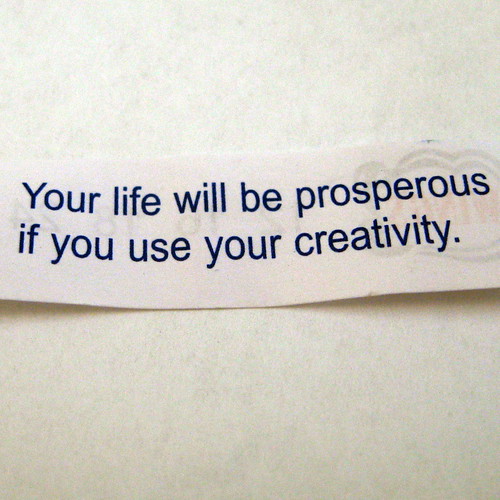
Are You Creative?

I've been supervising student teachers this semester, which is one of the best parts of my job as a teacher educator. There are various aspects to this role, including coaching, encouraging, providing ideas and resources, and...of course...evaluation. One part of the multifaceted evaluation I do for each student teacher is to complete a form reflecting on their "dispositions for teaching"--how well do they exhibit the qualities and attitudes our department has identified as crucial for excellent teaching: professionalism, flexibility, resilience, cultural sensitivity, reflectiveness, and the like.

Among the dispositions we look for is creativity.

Via Patrick Johanneson
CC-BY-NC-SA 2.0
It seems to me that this is one of the dispositions student teachers most struggle with--for a variety of reasons. Some struggle with the pacing guides imposed upon them, feeling that these squash any creative ideas they might have for teaching. (They have to keep on pace with the other sections of 3rd grade, etc.) Others struggle with the content they have to teach, feeling like it's challenging enough for them--let along their students!--that it's better to just "tell 'em" than try to do anything creative in conveying the content. Others struggle with their philosophies of education, feeling that there may be a mismatch between their ideas of teaching and those of their cooperating teacher. And some simply struggle, feeling that they are "just not creative."

I try to be empathetic with them in any of these cases, but the last one I mentioned above is the most challenging for me to work with. Because I believe that everyone is creative!

I believe that we are created to create! And I have a feeling we often misconstrue being "creative" with being "artistic." But maybe I'm wrong about this. Just what is creativity anyway? Can we develop creativity? Or is it some inborn quality? I'm hoping to gain further clarity on this, so I post this question to you:

Are you creative? 

 The HaikuDeck below gets at some of my thinking about this. I'd love to hear your response.

Tuesday, March 12, 2013

A Great Mind-Mapping Tool

Are you having your students map out complex ideas? Need a way to help them visualize their thinking? Create their own concepts webs? Check out Text2MindMap for a fantastic, simple, and elegant solution.

Check out text2mindmap.com

Tuesday, February 26, 2013

Earthquakes!

In Science Methods today we were talking about teaching geology. We did several different activities: mineral identification, modeling the rock cycle, examining plate tectonic maps. I missed sharing this site in class--we just ran out of time! (Too much fun stuff...)

The U.S. Geological Survey has some really great resources to help support science and geography teachers. They have different kinds of maps available, for free, to encourage teaching geology and map skills to students at all grade levels.

In particular, I was fascinated with this interactive map page displaying information about recent earthquakes:

A screengrab from the USGS Earthquakes page.

You can customize the map to show earthquakes of different magnitudes and different lengths of time. It gives precise information as to when and where the earthquakes take place. (The legend button in the upper right-hand corner is helpful for understanding the coding scheme used on the map.) You might be surprised to see how many earthquakes have occurred in the past week or month--truly, we live on an active planet! 

This page could be a great seed for a mini-lesson. How might you use this with your kids?

Saturday, December 1, 2012

Ghoti, and the Treasures of the English Language

Whenever an oddity of English spelling or grammar comes up in class, I have a mini-lesson in my back pocket about "Why I Hate the English Language." (I don't, of course...but English does have some twisted spelling, grammar, and conventions...which can make it difficult to learn the rules.)

I happened again this week...I can't remember the exact context anymore, but off I went on my rant...

"How do you pronounce this part of a word?" as I write -ough on the board. The students usually respond in chorus:

"Uff." "Ooo." "Owe." "Off."