Showing posts with label Goals. Show all posts

Wednesday, January 6, 2021

Welcome to 2021: Let's Go!

Welcome to 2021!

I know, I know...I'm a few days late. But here we are. It feels like everyone I know has taken a collective sigh of relief that the madness of 2020 is now in the rearview mirror. Really, though, how different has the new year been from the old? I'm not sure there is something magical in closing the old calendar and opening up a new one. And yet, I find myself feeling hopeful for the new year, perhaps more hopeful than I've felt in sometime.

This past year I continued my practice of capturing one second of video every day using the 1 Second Everyday app. I smashed all of those seconds together again into a six and a half minute video recap of my year. As I watched it, I'm struck by how clearly I can remember so many of these one-second slices of life, both the highs and the lows. You're welcome to watch it here, if you like:


That last second of my 2020 is my niece leaping off of a chair in our living room. Her shout got cut off just a bit to squeeze the whole leap into one second. It was actually a, "Let's go!" And I can't think of a more fitting way to think about leaping into the new year: "Let's go!"

This is often the time of year where I--like many people--reflect on setting goals for myself. There is something about the milestone of the new year beginning that makes this seem right. Last year, about this time, I wrote a post wondering about the value of "resolutions" and whether goals need to be measurable to be attainable. I'm still wondering about this, I guess. I'm not really making any resolutions this year, and I'm not sure I'll set any measurable goals either.

Oh, yes...I could stand to lose a bunch of the pounds I packed on through stress-eating my way through 2020. And, yes...I'm planning to be out pedaling as soon as the snow and ice are done for this winter...and I'll probably shoot for 2000 miles on my bike again, since that has been about what I've been pedaling for the past couple of years. And I do intend to keep up the blogging, at least a few times each month. And, gratefully, I'm getting more intentional about spending time in prayer and reading scripture again, with the support of a new devotional I got for Christmas. And professionally, I have broad ambitions of both starting a podcast with a colleague this year, and drafting a book, as well as teaching to the best of my ability in our ongoing pandemic world.

That looks like a lot of goal-setting, doesn't it?

But I think my actual "goal" for 2021 is to be fully present in the things I'm doing. I want to take a cue from my niece's joy in jumping in with both feet, with a "Let's Go!" attitude.

Welcome to 2021, friends. Let's do this!

"Let's Go!"

Thursday, September 24, 2020

Learning Targets to Guide Your Teaching

You've probably heard the old saying, "If you don't care where you're going, any road will get you there." I think there is a lesson for all who serve as teachers in this in terms of setting goals for what we want our students to learn: if we aren't clear about our goals...any road will get us there.

But most of the time we do have goals for what we intend our students to learn! And this the key idea for learning targets: a well-framed learning target will help keep you on track as a teacher, and will also give clarity for students, so they will know what we are learning, and why.

In their excellent book, Understanding by Design, Grant Wiggins and Jay McTighe describe an alignment process from learning targets to instructional methods to assessment vehicles. The big idea? Clear learning targets give clarity on how you will know if students understand (which informs your assessment vehicles), and knowing how you will know what students understand informs your instructional methods. Basically, learning targets are the key for everything else! Without clarity on what we are intending students will learn, how will we know if they have hit the target? How will we know what we should be focusing on in our teaching?

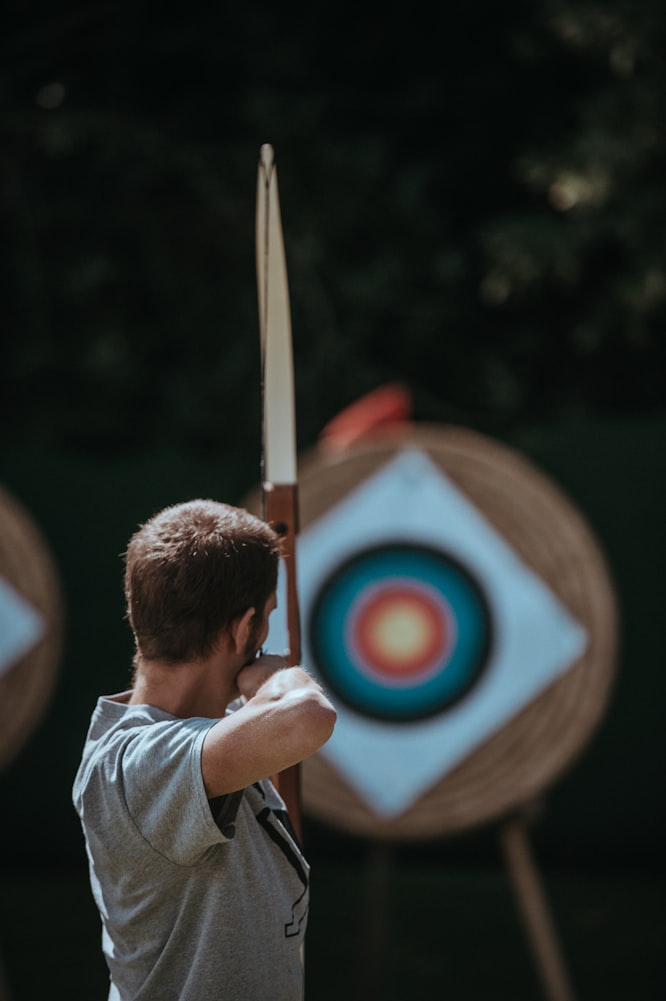
Image by Annie Sprat via Unsplash


Now, certainly clear learning targets are a benefit for all learning situations, not just distance learning! But in my experience clear communication is key to helping students manage the work of learning at a distance. Clear learning targets makes for clear communication about what they are learning, and why. So get in the habit of clearly explaining the target--why make students hurt themselves trying to figure out the main idea? It's much kinder of us to just tell them!


What makes for a strong learning target? You might use these principles to guide you...

Strong learning targets:

  • Give a clear explanation of what students should know, understand, be able to do, feel, or believe.
  • Are focused on what students do, not what instructors do. (Try starting them with, "I can...")
  • Use action verbs to give direction for how students can provide evidence of their learning.
  • Demonstrate awareness of both activity orientation and coverage orientation--the “twin sins" of design, as Wiggins & McTighe put it. (Walking that line of not just devolving into a series of activities that aren't connected to important learning and also not devolving into a series of topics to be "covered" with no time to actually understand them.)
  • Ideally, allow for multiple pathways to mastery. (There might be multiple ways to learn something, and multiple ways to demonstrate that you've learned it!)


How to write a strong learning target? Here are a few examples to consider...

1. In a grammar lesson, perhaps the teacher has a learning target of, "Students will know how to identify the main idea in a paragraph." Now, this is an excellent skill that students should learn! But in light of the suggestions above, here is perhaps a stronger way of framing this learning target:

  • I can summarize a paragraph’s main idea by writing one sentence in my own words.


2. In a history lesson, perhaps the teacher has a learning target of, "Students will read pages 125-128 of their history textbooks to learn about the causes of the American Civil War." Again, students should learn about the causes of the war, but this one perhaps leans into the sin of "coverage." A stronger way of framing this learning target:

  • I can describe multiple sources of conflict that led to the start of the Civil War.


3. In a science lesson, perhaps the teacher has a learning target of, "Students will build a paper airplane that can stay in the air for at least five seconds." This is a very difficult task! Is this the real learning target--the building of the airplane? This is likely the sin of "activitymania." A stronger way to frame this target might be:

  • I can describe my design process for creating a paper airplane that can stay in the air as long as possible.


These are just suggestions, of course, but I hope they illustrate the principles listed above. Will crafting a strong learning target suddenly make you into a master online teacher? Perhaps not...but it's a step worth taking!


---

(This post is part of a series offering tips on distance teaching. You can read more about this project here: Distance Teaching Tips. You can also read all of the posts in this series here: Distance Teaching Tips Series.)

Wednesday, January 1, 2020

Resolutions, Goal-Setting, and Making a Difference

It's 2020.

I just can't get over the fact that it is 2020.

Wasn't it just 2008 like 6 months ago? The 90s feels like just a few years ago. 2020 is supposed to be "the future" or something, isn't it?

And yet, here we are.

We had a quiet New Year's Eve celebration last night: just my immediate family. We had fondue for supper, played table games, and listened to 80s hits. We didn't even watch New Year's Rockin' Eve or anything; we just spent time together. It was pretty great, honestly.

During supper, we talked about New Year's Resolutions--I asked everyone if they had any resolutions for 2020. My daughter responded with wisdom she had seen on Instagram: "There are two kinds of people in the world: people who don't make resolutions, and people who break resolutions." I was a little surprised by this cynicism, but I get where she's coming from...people do often break their resolutions, and often soon after they are made. I've been there too, honestly. I shared a few examples of resolutions I made that actually stuck, like the year I resolved to lose 30 pounds (which actually took me about 18 months, but I did it) and the year I resolved to read the whole Bible in a year (which I actually did, using a chronological Bible.) But I get where she is coming from. And, when I'm really honest, these are exceptions for me rather than the rule. I'm likely to not follow through on my so-called resolutions either.