 |
| A screengrab from zeen.com. Go explore! |
Wednesday, February 27, 2013
Zeen: A Beautiful Way for Students to Display their Work
I'm always on the lookout for great ways for students to share their work--and especially with authentic audiences. Zeen looks like one of those ways! (Thanks to @mrsebiology for the tip.)

Tuesday, February 26, 2013
Earthquakes!
In Science Methods today we were talking about teaching geology. We did several different activities: mineral identification, modeling the rock cycle, examining plate tectonic maps. I missed sharing this site in class--we just ran out of time! (Too much fun stuff...)
You can customize the map to show earthquakes of different magnitudes and different lengths of time. It gives precise information as to when and where the earthquakes take place. (The legend button in the upper right-hand corner is helpful for understanding the coding scheme used on the map.) You might be surprised to see how many earthquakes have occurred in the past week or month--truly, we live on an active planet!
The U.S. Geological Survey has some really great resources to help support science and geography teachers. They have different kinds of maps available, for free, to encourage teaching geology and map skills to students at all grade levels.
In particular, I was fascinated with this interactive map page displaying information about recent earthquakes:
 |
| A screengrab from the USGS Earthquakes page. |
You can customize the map to show earthquakes of different magnitudes and different lengths of time. It gives precise information as to when and where the earthquakes take place. (The legend button in the upper right-hand corner is helpful for understanding the coding scheme used on the map.) You might be surprised to see how many earthquakes have occurred in the past week or month--truly, we live on an active planet!
This page could be a great seed for a mini-lesson. How might you use this with your kids?
Perception and Reality
Take a couple minutes to watch this video. It's pretty interesting...
It got me thinking about how often in schools we make snap judgments of our students and their abilities. Our immediate perceptions may not, in fact, give us the full story of who they are and what they can do.
This was just a great reminder for me to get beyond the immediate and look more deeply at my students. What are their gifts and talents--and which ones might not be instantly apparent? What are their strengths? What are their weaknesses? And how might what I initially perceive to be their weaknesses in reality be strengths? Where am I judging too quickly? How can I help students use their unique gifts to foster a learning-centered classroom?
I hope this gives you a moment to pause and reflect as well.
(Thanks to my friend Grace for sharing this video on Facebook.)
Images You Can Use Without Feeling Guilty
 |
| Don't be this guy, right? (Thanks to someecards.com) |
I think most educators--myself included--really want to do the right thing. Most teachers don't deliberately set out to break copyright law. But we might not know just what's required of us, or we're in such a rush to get things together for our lessons that we don't make the time to ensure that we're doing things right.
Monday, February 25, 2013
Teachers and Copyright
I'm occasionally part of a twitterchat on Saturday mornings (#rechat -- "Rethinking and re-imagining education" -- @johntspencer moderates...if you're a teacher on Twitter, you should follow him. Smart guy, and he'll challenge you to think about your teaching practice.)
This past Saturday, our chat centered on teaching digital citizenship. Several fellow chatters suggested that we need to stop differentiating between digital citizenship and "real life" citizenship. The implicit here is that digital life is part of "real life" and the rules should be the same. That is, your online rules should be the same as your offline rules.
I basically agree with this; people should be courteous, honest, kind, polite, helpful, and respectful whether they are online or offline. I want my students to be people of integrity no matter the venue! That said, I still think we need to teach students how to have good manners--both online and offline. And further, we need to model this for our students as well.
This past Saturday, our chat centered on teaching digital citizenship. Several fellow chatters suggested that we need to stop differentiating between digital citizenship and "real life" citizenship. The implicit here is that digital life is part of "real life" and the rules should be the same. That is, your online rules should be the same as your offline rules.
Saturday, February 23, 2013
Books for Boys: The Joys of Mythology
Mythology is just good fun. Great stories packed with heros and villains and gods and giants and monsters and angst and humor and all kinds of weird names.
I think reading myths can provide a good opportunity to talk about faith perspectives with your kids: comparing their beliefs with beliefs held by others. And certainly there is a cultural perspective that can be learned by reading the myths of a particular group of people. Add to this the fact that many fantasy stories seem to connect to characters and themes that appear in mythologies (Joseph Campbell, anyone?) and you've got some pretty strong reasons to try and hook a middleschooler on myths.
Because the stories are so great--battles, monsters, good & evil--I've found that these stories readily hook many boys. My favorites are D'aulaires' books; both the Greek Myths and the Norse Myths are excellent!


 For a more contemporary take on the Greek myths, I might recommend the Percy Jackson series. Here mythology takes a turn into fantasy. Imagine a world where the Greek gods are real, and the monsters and heroes from Greek mythology are also quite real and hiding just out of plain sight. And then imagine that you are a young adolescent who has to come to terms with the fact that his absent father is actually one of the Olympians and you have a pretty good introductory plot summary to The Lightning Thief. Engrossing stories--Rick Riordan is a fantastic storyteller!--that pull the drama and comedy of the classic myths into contemporary society. A great series!
 And if you give the Percy Jackson books a shake and enjoy them, you might go on to Riordan's take on Egyptian mythology--similarly told, translating classic stories into contemporary society--the Kane Chronicles. I've only read the first book in the series, The Red Pyramid, but I thoroughly enjoyed it, and would definitely recommend it for the middle school (5th-8th) crowd. Action-packed storytelling that teaches you quite a lot about ancient Egyptian culture, society, and mythology. I'm hoping to read the next two books soon.
Do you have other mythological favorites? Please share!
I think reading myths can provide a good opportunity to talk about faith perspectives with your kids: comparing their beliefs with beliefs held by others. And certainly there is a cultural perspective that can be learned by reading the myths of a particular group of people. Add to this the fact that many fantasy stories seem to connect to characters and themes that appear in mythologies (Joseph Campbell, anyone?) and you've got some pretty strong reasons to try and hook a middleschooler on myths.
Because the stories are so great--battles, monsters, good & evil--I've found that these stories readily hook many boys. My favorites are D'aulaires' books; both the Greek Myths and the Norse Myths are excellent!


Of course, there are lots of other collections of mythologies from around the world, and D'aulaires' aren't the only ones around. But I think pretty highly of them--perhaps nostalgically, since I loved them as a child--and they've stood the test of time...still great today. Classic stories, classically told.
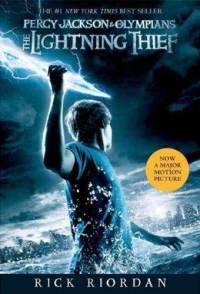 For a more contemporary take on the Greek myths, I might recommend the Percy Jackson series. Here mythology takes a turn into fantasy. Imagine a world where the Greek gods are real, and the monsters and heroes from Greek mythology are also quite real and hiding just out of plain sight. And then imagine that you are a young adolescent who has to come to terms with the fact that his absent father is actually one of the Olympians and you have a pretty good introductory plot summary to The Lightning Thief. Engrossing stories--Rick Riordan is a fantastic storyteller!--that pull the drama and comedy of the classic myths into contemporary society. A great series!
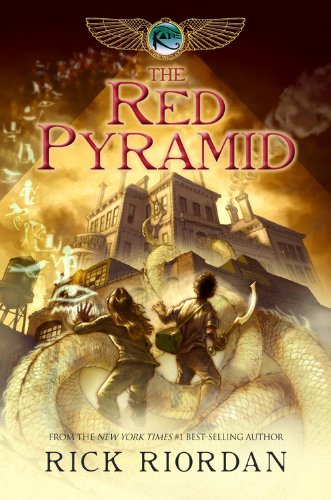 And if you give the Percy Jackson books a shake and enjoy them, you might go on to Riordan's take on Egyptian mythology--similarly told, translating classic stories into contemporary society--the Kane Chronicles. I've only read the first book in the series, The Red Pyramid, but I thoroughly enjoyed it, and would definitely recommend it for the middle school (5th-8th) crowd. Action-packed storytelling that teaches you quite a lot about ancient Egyptian culture, society, and mythology. I'm hoping to read the next two books soon.
Do you have other mythological favorites? Please share!
Thursday, February 21, 2013
Pre-assessment
I had a student stay after my science methods class this afternoon to talk. It was a really good conversation--helped me think through some things for my teaching practice.
Basically, she was wondering whether I practice what I'm preaching to them about assessment. (I love to talk about assessment in science!) In particular, I brought up the idea of pre-assessing to find out what students know and using that to inform your instructional decisions. The longer I taught science, the more I did this. I think it honors the students as "knowers"--they likely already know some of the material I hope they will learn, and finding out how much they know, understand, and are able to do before I start teaching can help me make decisions. And if students already know the material, don't go on and teach it anyway, right? This is the part that can be hard for me...
Basically, she was wondering whether I practice what I'm preaching to them about assessment. (I love to talk about assessment in science!) In particular, I brought up the idea of pre-assessing to find out what students know and using that to inform your instructional decisions. The longer I taught science, the more I did this. I think it honors the students as "knowers"--they likely already know some of the material I hope they will learn, and finding out how much they know, understand, and are able to do before I start teaching can help me make decisions. And if students already know the material, don't go on and teach it anyway, right? This is the part that can be hard for me...
Subscribe to:
Posts (Atom)