Sunday, November 29, 2020

Thanksgiving Struggles

If you spend much time at all online, I'm confident you've seen the sentiment being shared about all of the awfulness of 2020. It's a fair complaint, I think. This year has been rough for many people in many ways. 

For me too, really. The year 2020 has been a tough one overall. 

Our family did not face the sort of economic pressures that many did, as our jobs are secure and we were often able to work from home as needed. But we have also been very aware of how we are spending money and wanting to be stewardly and frugal in a just-in-case sort of way. I recognize the privilege of this position, even as I write this. But it's still something I think about, and an added pressure.

Pandemic teaching has stretched me far out of my comfort zone; I think this has been my most difficult year of teaching (so far) since my first year. The spring emergency distance teaching adventure was stressful. This fall's revolving door of students in and out of quarantine has been stressful, not to mention dual-mode teaching with most of my students as "roomies" in our face-to-face class meeting and a handful of "zoomies" joining in via web conference. The emotional labor of teaching has never felt more palpable and demanding.

Likewise, our church has been in a very difficult spot with our pastor abruptly resigning this spring. I've been serving as an elder, so this has been an extra burden of congregational care for me. The challenges of dealing with pandemic decision-making related to how and when we should meet, which ministries we should try to continue in the short term, and how to keep encouraging faithful worship and discipleship have been taxing.

And then the political drama of 2020: ooof! With all the political polarization in the U.S. this year--and all of the related ridiculousness on social media--several formerly-close personal relationships have been strained, with some of them perhaps irretrievably damaged. (Time will tell, I guess?) More than this, the social distancing of pandemic quarantining has left me feeling more socially-isolated than normal in spite of spending even more time online than normal. And while I have a pretty strong introverted streak, this has left me craving more normal social interaction. I miss being able to go out regularly and easily. But I'm willing to make the sacrifices for communal good, and trying to protect the most vulnerable folks in our community as much as possible. That said...I will be happy to be done with masks!

And...having COVID-19 was no picnic either! Overall, I can't complain too much--my case was pretty mild, all things considered. But even though I've been over it for several weeks now, I still find myself tiring out easily. And I worry about the long-term effects that we don't yet know. How concerned should I be about a lingering cough, and a little tiredness?

All together, this has added up to an emotionally exhausting year. And we aren't even to the end of it yet!

This week was Thanksgiving. Honestly, I wasn't feeling very thankful coming into the week. It was a crazy busy week for me with preparing for completing our academic semester (after a short Thanksgiving break) online. I had a lot of extra meetings with students and colleagues on Monday-Wednesday. And along with this, my wife and I were preparing to lead worship at our church's Thanksgiving Eve evening service on Wednesday.

And that's where things came together for me. In our Thanksgiving Eve service, our guest pastor (Ben Wiersma, who is a gem) preached on 1 Chronicles 29:10-20. This passage is mostly a prayer of King David, in response to the generosity of the gifts people had given to build the Temple. But it's significant that David's prayer is mostly a prayer of praise and thanksgiving to God and not about the things the people had, but about who God is. This really hit me...because so often Thanksgiving is about saying "thanks" for stuff. 

The song of response we sang was "Goodness of God" and it just hit me: this song might be my theme song for 2020. It helped me reframe (again!) that it's not about me. The chorus of this song goes like this:

And all my life You have been faithful 
And all my life You have been so, so good 
With every breath that I am able 
Oh, I will sing of the goodness of God

If you aren't familiar with the song, here's a recording by one of the Dordt worship teams from this past spring--this video was used at our livestreamed commencement ceremony earlier this year:


The combination of this message from Ben and this song has been such a great reset for me...and it's helping me get over myself a little bit. The song keeps running through my head, and I keep coming back to the message of who God is as something for which I can (and should) give thanks. 

Is this a panacea that has suddenly snapped me out of my 2020 funk? Nope. But it's helping me reframe, and find that there are many things I am actually thankful for.

I love my wife and kids, and while it was stressful for all of us to be together so much throughout the spring and summer, we had a lot of great times to make memories. I'm grateful that we largely grew closer together through this experience.

I love my work, and I am so, so grateful for the team of educators I get to teach alongside. Not to mention the incredible future teachers I have the opportunity to serve!

I love my church, and while it has been a rough year, I'm grateful to walk with these people, even through the hard times.

I love my extended family and friends, and I am truly grateful that we've been able to keep in touch via technology, even when we can't always meet up.

I love that my health has been good enough that I met my goal of biking 2000 miles this year. In fact, I've pedaled 2020 miles for 2020--and I'm grateful that my body is functioning well overall.

It has been easy for me to lose sight of things that are actually important and the places where I can--and should--be giving thanks. There have been struggles, real struggles this year. But I am also thankful in spite of the struggles. 

God has been good to me; His goodness is running after me.

Tuesday, November 17, 2020

Take My World Apart

I've been playing my guitar a lot more regularly at home lately. I'm not 100% sure what that's about. Often I gravitate toward playing when I'm feeling sad, or upset, or having other big feelings that I don't really want to talk about, and instead they come out through the strings of my guitar. Tonight I wasn't really feeling any big feelings, but I still headed to the basement and pulled out my guitar for a while to make some music. 

I know my limitations as a musician. I can play fine enough--particularly if I have the chords for a song--I can play pretty much anything, but it won't necessarily sound like it does on the radio. I mostly make a joyful noise, if you know what I mean.

I got my first guitar as a high schooler. I was 16, and I took lessons for a few months. I learned enough to get started, but I didn't exactly take to it immediately. But my guitar came with me to college, and I think that's where I really started to learn for real. I still have some chord sheets that I printed off from the On-Line Guitar Archive in the mid 1990s. (Ah, OLGA...I remember you when...) Maybe you can picture me with a mop of blonde hair (with a center part, because, you know, the mid 90s) and wearing flannel and jeans with holes in the knees, strumming away on my acoustic guitar in my apartment? I can admit now that I harbored some secret dream of being part of an acoustic alternative rock group--it was the age of MTV unplugged and all that, after all! But that's a late-adolescent imagination, I suppose.

Still, it's funny how the songs I played then are the ones I still know by heart. "Time" by Hootie and the Blowfish. "Run Around" by Blues Traveler. "Breakfast at Tiffany's" by Deep Blue Something. "One Headlight" by The Wallflowers. "Untitled" by Collective Soul. "Walk on the Ocean" by Toad the Wet Sprocket. "All for You" by Sister Hazel. "The Freshman" by the Verve Pipe. "Lightning Crashes" by Live. (Oh, so many songs...) Some of these bands you might know...others probably not. But they left a mark on me, and they are still part of me.

And, of course, my favorite band of all from that era, Jars of Clay. Jars was my go-to Christian band for...well, honestly, for the past 25 years. As my taste in music has changed and expanded over the years, this is one band that stuck: I'm a forever-fan of these guys, and the way they take their faith so seriously, and the way it informs their musicianship. Their self-titled first album...I must have listened to that one a hundred times during the 1995-96 school year. And, here I am 25 years later... and I can still play many of those songs off the top of my head--by heart.

But it's interesting how we talk about "knowing songs by heart," isn't it? Somehow, these songs that I played so often in my apartment got deep inside of me, into...my heart?

And tonight, that's where I was, in the basement, strumming and singing. Like it was the spring of 1996...I was playing one of my very favorite Jars songs, "Worlds Apart." If you're not familiar with the song, I'd welcome you to take a listen:


I love these lyrics. I love the music of this one. The poetry of this song speaks to me.

And in this contemporary moment, where everyone--me too!--seems outraged about everything, maybe this is the prayer that I need to be praying again. (Maybe you too?)

I am the only one to blame for this 
Somehow it all ends up the same
Soaring on the wings of selfish pride
I flew too high and like Icarus
I collide

With a world I try so hard
To leave behind
To rid myself of all but love
To give and die

...

To love you, take my world apart
To need you, I am on my knees
To love you, take my world apart
To need you, broken on my knees 

All said and done I stand alone
Amongst the remains of life I should not own
It takes all I am to believe
In the mercy that covers me

Did you really have to die for me? 
All I am for all you are
Because what I need
And what I believe
Are worlds apart
And I pray 

To love you, take my world apart
To need you, I am on my knees 
To love you, take my world apart
To need you, broken on my knees 

...


Not out of any self-righteousness here...but I needed to sing this song tonight. I needed to pray these words tonight. I need to get over myself. I need to stop thinking so highly of myself, and my opinions, and my self-assumed rightness, as if I can look down my nose at people who think differently than I do, judging them as wrong, because I must be right.

Right now, I'm feeling that I need to humble myself a little bit. Try to be a little more like Jesus. Stop trying so hard to build my own kingdom, and care more about building His. 

Take my world apart.

Certainly this is not scripture...its poetry, music. 

Take my world apart. 

But I think this song captures the gospel.

Take my world apart.

Help me to care more about loving You, loving my neighbors, loving my fellow humans who are created in Your image, loving this world you have made.

Take my world apart, Jesus. 

And let me step more and more into Your world, Your kingdom, Your way of being.

Monday, November 2, 2020

Do the Next Right Thing

I am grateful that I have colleagues who check in on me regularly. My dear friend and colleague in the office next door asked me this morning how the weekend was, and I shared a few of the highs and lows. I'm feeling a lot of anxiety and concern for the church, and the world, and our fractured political climate in the US right now, but being able to share this with a friend who really listens sure helps. As we concluded our short conversation, he reminded me that sometimes we just need to "do the next right thing."

And so, I headed to my office and got on to the many tasks of the day...and I found a song from Frozen 2 running in my head...


And, perhaps strangely, I'm thinking about Psalm 119:105 right now:

Your word is a lamp to my feet

and a light to my path.

I once heard a sermon where my pastor pointed out that the psalmist doesn't say God's word is a spotlight that makes every step on the path clear to us. It's a lamp, perhaps so dim that it only gives enough light for us to see our feet on a dark and unfamiliar path, enough light for us to take the next step on the journey. And that's what faith is about, I think. Not that we have every step of the journey plotted out, but that we have confidence that God goes with us on every step of the journey, and that He already knows the path ahead of us, and that's enough.

And I guess that's my reflection for today. Not the "gospel according to Disney," or anything like that. But when I feel like my world is too chaotic and out of control, I'll just take the next step in faith, make the next move that I can in harmony with the message of the gospel, ...and "do the next right thing," trusting that God goes with me, and that's enough for today. 

Wednesday, October 14, 2020

No Apologies for My Email

In the age of COVID-19, I'm struggling with keeping up with email. (I mean, I'm struggling with other things too, but this is one specific and tangible struggle.) I have some strategies that I use for managing my inbox, but they aren't always working these days. I'll share a few of my strategies here, but also a nugget of truth that I think I've finally settled on for not feeling guilty about struggling to keep up.

I rarely achieve inbox zero, but because I use my email inbox as a key part of my workflow, I do generally try to keep my inbox to fewer than 30 items whenever possible. I use folders to sort messages I need to hang on to--"department business," and "academic affairs," and "church stuff," and "IMPORTANT" are all folders I use regularly, in addition to a dedicated folder for each course I'm teaching. And I'm learning to delete with abandon--how did I get on so many mailing lists that are only tangentially related to me and my interests anyway? If it's not something I am going to need to keep, into the trash it goes. All of this helps remove the clutter.

I learned in grad school that I had to compartmentalize my day, or I would wind up ping-ponging back and forth between things and losing productive work time. One strategy I practiced then--and have recently reinstated--is closing my email for big chunks of the day. That little pinging email icon with the numerical counter of unread messages is designed to grab our attention. Closing the program and only opening it when I have the time to dedicate to answering messages helps manage this distraction.

My general rule is that I plan to respond to messages within 24 hours, and I almost always am able to do this. I will say that I prioritize: if it's a message from a current student or from a colleague about something time-sensitive, I do try to answer those ones as soon as possible. If it's from someone outside the institution, or something that is less time critical...I try to hold off on those ones if possible.

Setting up a few times a day to read and respond to email does help. One approach I've tried to practice in the past and still mostly successfully achieve is the 2-minute rule: when I'm "doing email," if I can respond to a message in less than 2 minutes, I will do it right now and not put it off until later. This helps free up space in the inbox, and thus in my mental workflow as well.

As useful as these strategies have been, however, I still am finding that I struggle to keep up with the email avalanche from time to time. There are still some messages that get lost in the shuffle, and then I find them days later--far longer than my normal 24-hour window. I hate this feeling, and my first impulse it to send an apologetic email in response.

But here's the nugget of truth, and the associated strategy I've been using lately. Instead of an "I am SO sorry...!" opening to my tardy email in response, I've changed up my language a bit. I am now starting those emails with, "Thanks for your patience with my slower-than-normal response." 

Because this is the truth: I think we are all up to our eyebrows in keeping up, and I am finding it relatively easy to extend grace to other people who don't get back to me as quickly as I would like...because I'm so grateful when they extend this grace to me as well. Opening with a "thanks!" message instead of an apology is my way of signaling this.

I hope that we all can normalize this. Certainly there is a sense of professionalism and responsibility in getting back to people as soon as possible. But in the age of COVID? Let's make it "no apologies needed."

Image by Stephen Phillips - Hostreviews.uk.com via Unsplash

Monday, October 5, 2020

Writing, Teaching, Thinking, Working

Thanks to the many of you, dear readers, who commented (via Twitter, Facebook, text, email, hallway conversation, or carrier pigeon) in response to my writing project here on the blog last month. (If you weren't reading along, no worries! I'm glad you're here now. If you want to take a look at that project, it was a series of posts offering tips for teaching at a distance. You can read the whole series here if you like: Distance Teaching Tips Series.) This is my 33rd post on the blog for 2020. 18 of those came last month, trying to get myself disciplined to write again. 

It's amazing to think about how this year has unfolded. 2020 has just been a tough year in so many ways. I thought that with the time at home on quarantine in the spring, I would have written a lot. I just didn't have it in me. It was hard work just to keep up with the teaching.

Then I thought I might do some more writing this summer. Nope--I was busy with teaching online in our Master of Ed program and doing some consulting work offering PD sessions to help K-12 teachers prepare for teaching at a distance this year.

And then came the end of summer, with the scramble to prepare for hy-flex teaching this fall. Oof. It's been demanding, friends, to say the least. Don't get me wrong...my students are amazing. My courses are going well. My colleagues are incredibly supportive. But I'm tired. all. the. time.

Teaching is hard work under the best of circumstances. I know none of my fellow educators are surprised to hear me say that. But I am often amazed at how non-educators think that our profession is some sort of walk in the park. And this year? The emotional work of teaching is all the more demanding. All the extra demands for...everything...just feels like a burden. I'm SO grateful for what I get to do, so I don't want this to sound like complaining. I'm not. But I'm acknowledging that this has been hard--really hard. And I know my students are feeling that way too; several have said as much. They are grateful to be here, they are glad to be on campus, making the efforts to do all the things that have to be different this year to make it happen. But several have named it: it's hard, and they are pining for the "normal."

I am too.

One of the joys in my work as a professor is that I am expected to think, and research, and write, in addition to my teaching. I love this stuff. But this year, the thinking, and researching, and writing feels sort of superfluous. Or at least, maybe it's less important than the teaching? I'm thinking a lot, of course. But so much of my thinking ends up circling back to thinking about my courses, about my students, about how to help them, and support them, and encourage them, and how to not get buried in the work.

Ah, the work. Working in academia is kind of weird. The work is almost all cognitive, and emotional. Teaching is such public work, but intensely personal as well. And as I'm thinking about what has just blurred out of my keyboard in the past 15 minutes here, maybe this is a great example of what I'm doing. I just had to get this feeling out of my head and heart in some way, and so the words spilled out into pixels here on the blog.

I guess I'll title this post something about writing, and teaching, and thinking, and working. This semester they all feel so interrelated--even more than normal.

I don't know if I'll even push this one on social media now that it's written. This one might actually just be for me.

Monday, September 28, 2020

When Are Those Assignments Due?

What time are assignments due for your class? Most learning management systems (LMSs) have a default time of midnight. But do assignments need to be submitted by midnight? Why is that the magic hour?

I'm on a mailing list from Faculty Focus, a resource for instructors in higher ed. Today's email had the subject "Cinderella Deadlines." I thought that was clever enough to click the link to this article: Cinderella Deadlines: Reconsidering Timelines for Student Work. It's good stuff, and it echoes much of what I do for my own courses, most of the time.

Why have assignments due at midnight? It's not like I'm sitting there waiting to get started on the grading at the stroke of 12, after all! So why not reimagine due dates a bit?

For my face-to-face courses (and the hybrid-flexible courses I'm teaching this semester) I set my assignments to be due by class time. If class starts at 9:25 a.m., assignments are due at 9:25, right? Makes sense.

So now I'm reflecting on my practices for online courses. I generally an approach more like the "due dates are arbitrary and give a nudge for the procrastinators" (like me.) What I mean by this is, I know often need a deadline as a student, or else the tyranny of the urgent means other things will crowd out the assignment in question. So I do have due dates...but I'm generally pretty easy on these. If a student doesn't have the work in at a particular time, does that mean they didn't learn the concepts?

I know, I know...work habits and all that business. Yes, there are external obligations and students do need to learn to comply with those obligations. But in all seriousness...most due dates are arbitrary and are set for the teacher's convenience. 

My encouragement: use due dates in your LMS to set deadlines...but be gracious. I suspect most of us would respond well to a little extra grace in our own lives, yeah? So as long as there isn't some compelling reason that a particular assignment must be submitted by 9:25 a.m. (or midnight?), maybe a little flexibility could be a blessing for a student in your life?

Image by Rishabh Agarwal via Unsplash


---

(This post is part of a series offering tips on distance teaching. You can read more about this project here: Distance Teaching Tips. You can also read all of the posts in this series here: Distance Teaching Tips Series.)

Thursday, September 24, 2020

Learning Targets to Guide Your Teaching

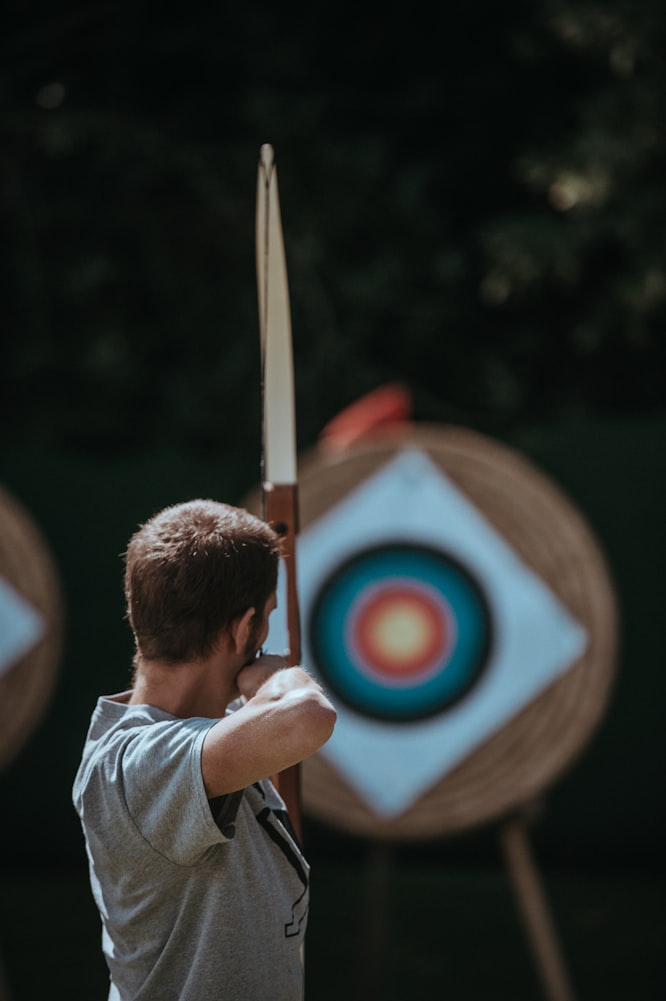
You've probably heard the old saying, "If you don't care where you're going, any road will get you there." I think there is a lesson for all who serve as teachers in this in terms of setting goals for what we want our students to learn: if we aren't clear about our goals...any road will get us there.

But most of the time we do have goals for what we intend our students to learn! And this the key idea for learning targets: a well-framed learning target will help keep you on track as a teacher, and will also give clarity for students, so they will know what we are learning, and why.

In their excellent book, Understanding by Design, Grant Wiggins and Jay McTighe describe an alignment process from learning targets to instructional methods to assessment vehicles. The big idea? Clear learning targets give clarity on how you will know if students understand (which informs your assessment vehicles), and knowing how you will know what students understand informs your instructional methods. Basically, learning targets are the key for everything else! Without clarity on what we are intending students will learn, how will we know if they have hit the target? How will we know what we should be focusing on in our teaching?

Image by Annie Sprat via Unsplash


Now, certainly clear learning targets are a benefit for all learning situations, not just distance learning! But in my experience clear communication is key to helping students manage the work of learning at a distance. Clear learning targets makes for clear communication about what they are learning, and why. So get in the habit of clearly explaining the target--why make students hurt themselves trying to figure out the main idea? It's much kinder of us to just tell them!


What makes for a strong learning target? You might use these principles to guide you...

Strong learning targets:

  • Give a clear explanation of what students should know, understand, be able to do, feel, or believe.
  • Are focused on what students do, not what instructors do. (Try starting them with, "I can...")
  • Use action verbs to give direction for how students can provide evidence of their learning.
  • Demonstrate awareness of both activity orientation and coverage orientation--the “twin sins" of design, as Wiggins & McTighe put it. (Walking that line of not just devolving into a series of activities that aren't connected to important learning and also not devolving into a series of topics to be "covered" with no time to actually understand them.)
  • Ideally, allow for multiple pathways to mastery. (There might be multiple ways to learn something, and multiple ways to demonstrate that you've learned it!)


How to write a strong learning target? Here are a few examples to consider...

1. In a grammar lesson, perhaps the teacher has a learning target of, "Students will know how to identify the main idea in a paragraph." Now, this is an excellent skill that students should learn! But in light of the suggestions above, here is perhaps a stronger way of framing this learning target:

  • I can summarize a paragraph’s main idea by writing one sentence in my own words.


2. In a history lesson, perhaps the teacher has a learning target of, "Students will read pages 125-128 of their history textbooks to learn about the causes of the American Civil War." Again, students should learn about the causes of the war, but this one perhaps leans into the sin of "coverage." A stronger way of framing this learning target:

  • I can describe multiple sources of conflict that led to the start of the Civil War.


3. In a science lesson, perhaps the teacher has a learning target of, "Students will build a paper airplane that can stay in the air for at least five seconds." This is a very difficult task! Is this the real learning target--the building of the airplane? This is likely the sin of "activitymania." A stronger way to frame this target might be:

  • I can describe my design process for creating a paper airplane that can stay in the air as long as possible.


These are just suggestions, of course, but I hope they illustrate the principles listed above. Will crafting a strong learning target suddenly make you into a master online teacher? Perhaps not...but it's a step worth taking!


---

(This post is part of a series offering tips on distance teaching. You can read more about this project here: Distance Teaching Tips. You can also read all of the posts in this series here: Distance Teaching Tips Series.)