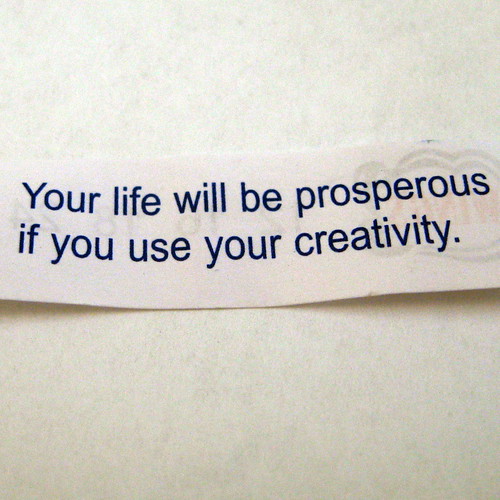
Thursday, March 28, 2013

Tech Tool: Story Starters

English teachers, this one is for you. Check out the Story Starters tool on Scholastic.com.

I was visiting a student teacher yesterday and she was starting a new unit on creative writing with her 6th graders. She had a variety of tools to help them generate ideas for stories, but this one was probably the class's favorite.

A screengrab from Scholastic.com

Tuesday, March 26, 2013

Overwhelmed

There are moments when I feel that my vocation as an educator is way, way too big for me. There are moments where I feel so ineffectual and small that I don't have what it takes. There are moments that the classroom feels oppressive and the students feel strange and distant and the marking feels insurmountable and I feel inadequate.

There are moments when I am overwhelmed.

But, thanks be to God, it isn't all about me.

Saturday, March 23, 2013

Christian Education: Simple Truth

I.

18 years ago I was a freshman in college and my roommate introduced me to a little-known Canadian band called Hokus Pick Manouver. These guys are Christians, and they don't really pull any punches, but they also don't take themselves too seriously. The have a silly song called "Simple Song" on their album Pick It Up. Here, give it a listen...


For those of us in Christian education, I think this is something we need to think about, and talk about.

How shall we profess the Truth to our students?

Thursday, March 21, 2013

The 5 E's Learning Cycle: An Inquiring Methodology

In Science Methods today we were talking about teaching via inquiry. This is a topic we've dealt with before, but it's one that students who haven't experienced inquiry-infused science classes before really struggle with. And to be honest, that's most of my students.

So I'm trying to find ways of making it as tangible for them as possible. We do a lot of science together, which helps them to picture it. Today, I wanted to clearly explain some of my thinking behind the way I've structured the activities we've done lately. So I explained that I have been using a methodology termed the Learning Cycle, which is sometimes referred to as the "5 E's." The HaikuDeck below was a key part of our discussion today:


This isn't the only way to teach science, of course. But I've put it into practice myself as a middle school science teacher, and it really does work well as a way of coaching students into doing science, rather than just learning about science.

I find the following ideas crucial for this methodology (which might also determine the success or failure of a teacher's use of this approach):

  1. Don't minimize the importance of the "Engage" movement. Students need to have some sort of hook to get them primed, asking questions, thinking, and ready to learn. Discrepant events are great for this, but there are other great ways to get students engaged. Children's literature and storytelling are also fantastic hooks.
  2. When investigating in the "Explore" movement, do make sure the activity is both hands-on and "minds-on." I've found it works best if this investigation is not a cookbook-style activity (do this, do that, bake at 350°, and you get a chocolate cate), but rather a more open-ended investigation that prompts further questions and pushes students to have to figure things out and make inferences based on what they observe.
  3. In the "Explain" movement, it is SO tempting for you as teacher to be the "Explainer." Fight this urge; this movement works best if the students do most of the talking. They should be the ones explaining their thinking. That doesn't mean you won't be an active participant as well, however; this is a key place to guide the discussion and try to probe for misconceptions, and prompt alternative lines of thinking that will lead to more scientific understanding.
  4. Don't skip the "Elaborate" movement! This is an extremely important part--having the students put the pieces together and demonstrate their new understandings. Whether that be another hands-on investigation (preferably student-designed!), or a research project, or some sort of creative response, this movement is where the new understandings are consolidated and made explicit.
  5. Finally, while the "Evaluate" movement has an air of finality to it, recognize that this cycle is a cycle--the students' elaborating work might prompt further questions, that might be the kickstart of an "Engage" movement for another learning cycle. Evaluating students work need not be an end of learning. Also, the final assessment of a particular learning cycle should not be the only assessment that takes place; ideally, ongoing formative assessment will be part of every movement!
One final note: while we were talking about this specifically as a methodology for teaching science in elementary and middle school, this approach would transfer well to most any subject area and to any grade level. I hope you'll consider giving it a try, and sharing your experiences with putting the 5 E's into practice in your own classroom.

Wednesday, March 20, 2013

Are You Creative?

I've been supervising student teachers this semester, which is one of the best parts of my job as a teacher educator. There are various aspects to this role, including coaching, encouraging, providing ideas and resources, and...of course...evaluation. One part of the multifaceted evaluation I do for each student teacher is to complete a form reflecting on their "dispositions for teaching"--how well do they exhibit the qualities and attitudes our department has identified as crucial for excellent teaching: professionalism, flexibility, resilience, cultural sensitivity, reflectiveness, and the like.

Among the dispositions we look for is creativity.

Via Patrick Johanneson
CC-BY-NC-SA 2.0
It seems to me that this is one of the dispositions student teachers most struggle with--for a variety of reasons. Some struggle with the pacing guides imposed upon them, feeling that these squash any creative ideas they might have for teaching. (They have to keep on pace with the other sections of 3rd grade, etc.) Others struggle with the content they have to teach, feeling like it's challenging enough for them--let along their students!--that it's better to just "tell 'em" than try to do anything creative in conveying the content. Others struggle with their philosophies of education, feeling that there may be a mismatch between their ideas of teaching and those of their cooperating teacher. And some simply struggle, feeling that they are "just not creative."

I try to be empathetic with them in any of these cases, but the last one I mentioned above is the most challenging for me to work with. Because I believe that everyone is creative!

I believe that we are created to create! And I have a feeling we often misconstrue being "creative" with being "artistic." But maybe I'm wrong about this. Just what is creativity anyway? Can we develop creativity? Or is it some inborn quality? I'm hoping to gain further clarity on this, so I post this question to you:

Are you creative? 

 The HaikuDeck below gets at some of my thinking about this. I'd love to hear your response.

Monday, March 18, 2013

School and Life

I saw this online today, and it got me...

Tried to find a source for this one. Found it here, herehere, and here.
I wish people would make it easier to give proper credit for great images.
With thanks to @delta_dc for sharing it via Twitter.

What do you think?

Truth?

Or Fiction?

Please comment to share your reaction!

Friday, March 15, 2013

Einstein: Advice for Teachers

Via krisolin (CC BY-NC-SA 2.0)

There are countless of quotes floated about attributed to Albert Einstein. I'm sure many of them--probably most of them--are authentic. Some are probably not. To his credit, he did have a lot of good stuff to say about a great many topics beyond physics. I think the above is a good example, and a worthy admonishment for all educators. 

Of course teachers need to have solid pedagogical knowledge (how to teach.) But they also have to have solid content knowledge (what to teach.) And if teachers can't explain things simply, maybe it's because they don't actually understand it well enough themselves.